
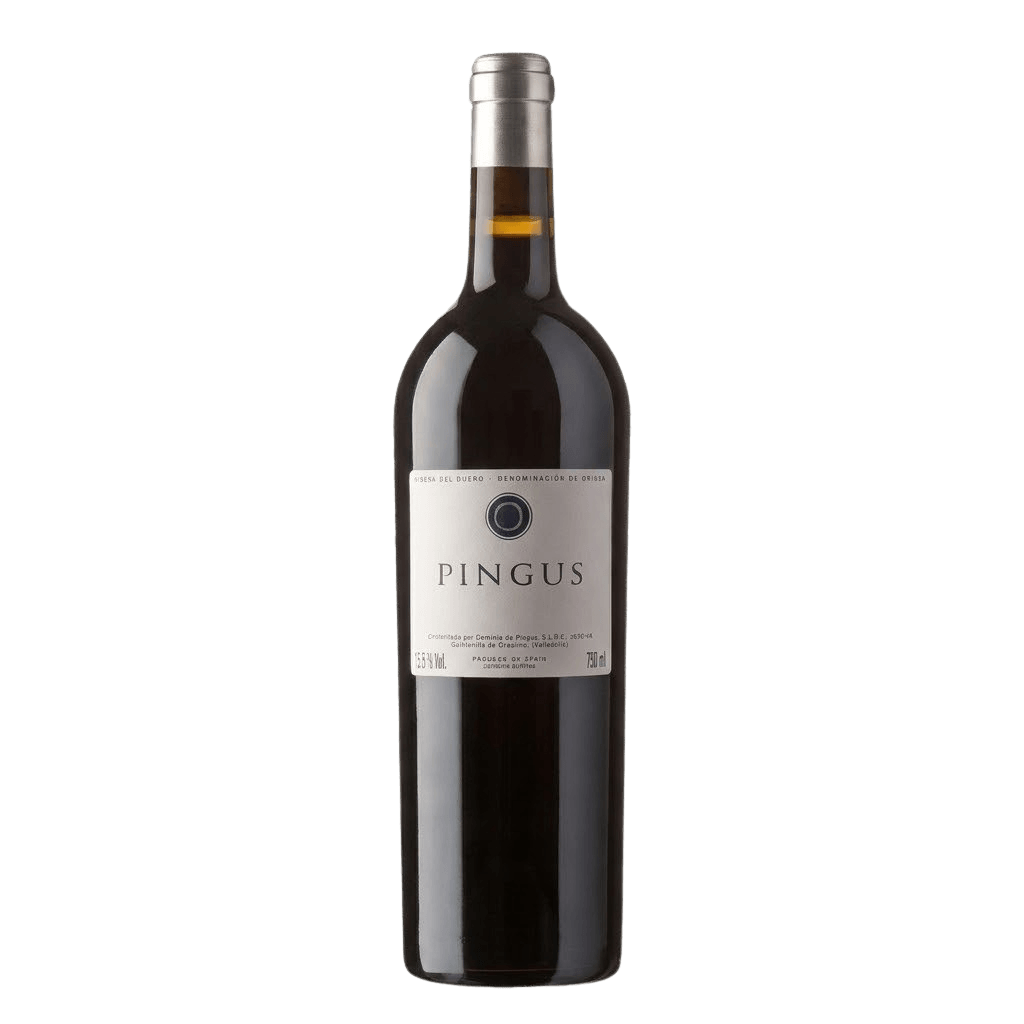
Dominio de Pingus
Pingus
2009
Pingus represents Dominio de Pingus' uncompromising vision: a micro-production, old-vine Tempranillo from Ribera del Duero that has achieved cult status among collectors and fine wine enthusiasts worldwide.
Country
Spain
Region
Ribera del Duero
More information
Producer
Dominio de Pingus is one of Spain's most collectible wine estates and a defining name in modern Ribera del Duero. Founded in 1995 by Danish winemaker Peter Sisseck in the village of La Horra, the estate has achieved cult status through its single-vineyard approach and uncompromising commitment to old-vine Tempranillo. Its flagship wine, Pingus, is produced in minute quantities and has become one of the most sought-after and investment-grade wines in the world.
Quick Facts
- Location: La Horra, Ribera del Duero, Spain
- Founded: 1995
- Founder and winemaker: Peter Sisseck
- Ownership: Family-owned
- Appellation: Ribera del Duero DO
- Primary grape: Tempranillo (locally known as Tinto Fino)
- Viticulture: Organic farming, extremely low yields often below 600 litres per hectare
- Signature characteristic: Ungrafted vines, many over 65 years old
- Soils: Gravel, clay and limestone
- Grand Vin: Pingus
- Estate wines: Flor de Pingus, PSI
- Style: Concentrated, elegant and terroir-focused with exceptional structure
- Ageing potential: 20 to 40 years and beyond
A Cult Estate Born from a Single Vision
Peter Sisseck arrived in Ribera del Duero in the early 1990s with a clear ambition: to produce a wine of world-class distinction from the region's oldest, most exceptional vineyard parcels. In 1995, he released the first vintage of Pingus, crafted from a handful of small plots containing ancient, ungrafted Tempranillo vines.
The wine immediately attracted international attention for its purity, concentration and finesse. Within a few years, Pingus had established itself alongside the finest wines of Bordeaux and Burgundy in the eyes of critics and collectors, redefining expectations for Spanish wine and elevating Ribera del Duero to global prominence.
Old Vines, Extreme Selection
The estate's identity is inseparable from its exceptional vineyard holdings. Sisseck works with pre-phylloxera vines, some planted as far back as the 1920s and 1930s, rooted directly into the region's characteristic soils of gravel, clay and limestone. These ungrafted plants, trained as traditional bush vines, produce extraordinarily small yields that deliver intense flavour and structural depth.
Yields are deliberately restricted to levels rarely seen in commercial viticulture—often below 600 litres per hectare. This extreme selection, combined with organic farming practices, hand-harvesting and meticulous parcel-by-parcel vinification, allows each wine to express the singular character of its origin with clarity and concentration.
The result is a style defined not by power alone but by balance: wines that combine density and elegance, fruit purity and mineral complexity, structure and freshness.
Pingus and the Broader Portfolio
At the summit of the estate stands Pingus itself, produced from a tiny selection of the oldest and most expressive parcels. Fermented with natural yeasts and aged carefully in French oak, it is released in minuscule quantities and commands exceptional prices at auction.
Flor de Pingus, introduced with the 1996 vintage, is sourced from younger vines and additional parcels within La Horra. It shares the estate's philosophy of terroir expression and old-vine fruit while offering earlier accessibility and a more approachable entry point into the Dominio de Pingus style.
PSI, launched in 2007, extends Sisseck's vision across a broader selection of Ribera del Duero vineyards. Produced in larger volumes, it represents an effort to bring the principles of low-yield viticulture and minimal intervention to a wider audience without compromising on quality or identity.
Together, these wines form a portfolio united by meticulous farming, respect for place and an uncompromising pursuit of balance and longevity. Dominio de Pingus remains one of the most influential and collectible estates in Spain, a benchmark for what Ribera del Duero can achieve and a reference point for fine wine worldwide.
Country
Region
Ribera del Duero
Ribera del Duero is widely regarded as one of Spain's most prestigious wine regions and has established itself among the world's great producers of age-worthy red wines. Located along the Duero River in north-central Spain, the region combines centuries of winemaking tradition with exceptional high-altitude terroir, producing some of the most sought-after and collectible wines in Europe. Since receiving Denominación de Origen status in 1982, Ribera del Duero has become synonymous with powerful, structured Tempranillo that rivals the finest wines of Bordeaux and Burgundy.
The region stretches across the Castilla y León plateau at elevations between 750 and 1,000 metres, where continental climate extremes create ideal conditions for Tempranillo, locally known as Tinto Fino or Tinta del País. Limestone and clay soils combined with dramatic diurnal temperature variation produce wines of remarkable concentration, intense fruit character and extraordinary ageing potential. Hot summer days and cool nights preserve natural acidity while developing deep colour and complex tannins. The region's four provinces—Burgos, Valladolid, Segovia and Soria—each contribute distinctive expressions of high-altitude Spanish terroir.
Ribera del Duero is home to legendary estates including Vega Sicilia, whose Único remains one of the world's most collectible wines, alongside Pingus, Dominio de Pingus, Pesquera, Alión and Hacienda Monasterio. These producers have established the region's reputation for meticulous viticulture, extended oak ageing and wines of outstanding depth and longevity. The region's classification system designates Crianza, Reserva and Gran Reserva wines based on ageing requirements, ensuring consistent quality across all tiers.
Whether exploring iconic estates, benchmark vintages or the distinctive character of high-altitude Tempranillo, Ribera del Duero represents the pinnacle of Spanish fine wine. Discover Ribera del Duero wines, compare prices from trusted merchants across Europe and find the best offers with Sipfind.
Grapes
Tempranillo is Spain’s most internationally recognised red grape variety and the foundation of many of the country’s greatest wines. It reaches particularly distinguished expressions in Rioja and Ribera del Duero, where differences in altitude, climate and ageing traditions create remarkably diverse styles.
The grape typically combines flavours of red and dark cherry, plum and blackberry with notes of herbs, spice and tobacco. With oak ageing, Tempranillo can develop characteristic aromas of cedar, vanilla, leather and dried fruit, while retaining the balance of fruit, acidity and tannin that gives the finest examples considerable ageing potential.
Tempranillo adapts particularly well to Spain’s continental conditions. In the high-altitude vineyards of Ribera del Duero it can produce concentrated, powerful wines with firm structure, while Rioja is renowned for expressions ranging from vibrant and fruit-driven to complex, traditionally matured wines.
Known locally by names including Tinto Fino, Tinta del País and Cencibel, Tempranillo is grown across much of Spain and has become one of the defining varieties of Spanish wine. Its combination of structure, versatility and ability to express both terroir and maturation makes Tempranillo one of the world’s important red wine grapes.
History and Style
Pingus is the flagship wine of Dominio de Pingus, a visionary estate in Spain's Ribera del Duero DO that has redefined what Spanish wine can achieve. Created by Danish winemaker Peter Sisseck in the mid-1990s, Pingus emerged from a radical garage-wine philosophy: extreme low yields, old ungrafted Tempranillo vines, and minimal intervention winemaking. The result is a wine of extraordinary concentration, complexity, and ageability that commands respect on the global stage.
Quick Facts
- Producer: Dominio de Pingus
- Classification: Vino de Pago-level quality (estate wine)
- Region: Castilla y León
- Appellation: Ribera del Duero DO
- Country: Spain
- Style: Full-bodied, powerful yet refined Spanish red
- Grape Composition: 100% Tempranillo (Tinto Fino) from old vines
- Ageing Potential: 20-30+ years from vintage
- Alcohol (ABV): 14-15%
- Tasting Profile: Black cherry, plum, liquorice, graphite, earthy minerality, fine tannins
- Food Pairing: Roasted lamb, Iberian pork, game, aged Manchego, truffle dishes
- Serving Temperature: 16-18°C
- Bottle Status: Flagship
- Vintage: Vintage-dated (varies by release)
Vineyard, Terroir and Style
Dominio de Pingus works with exceptionally old vines, some pre-phylloxera, planted in poor soils across small parcels in La Horra and surrounding villages. These ancient Tinto Fino (Tempranillo) vines produce minuscule quantities of intensely flavoured fruit. The estate's meticulous viticulture and biodynamic approach emphasize balance and terroir expression, while winemaking remains traditional yet precise, with extended ageing in French oak.
History and Reputation
The wine itself is characterized by profound depth and structure, combining dark fruit intensity with mineral complexity, fine-grained tannins, and remarkable freshness. Tasting notes typically reveal black cherry, plum, liquorice, graphite, and earthy undertones, supported by elegant oak integration and extraordinary length. Despite its power, Pingus maintains an almost Burgundian finesse and site-specificity.
With production limited to just a few thousand bottles annually, Pingus has become one of the most collectible wines in Spain, sought after by fine wine enthusiasts and investors alike. Its 20-30+ year ageing potential from strong vintages makes it a benchmark for Ribera del Duero's ultimate expression.