
Petrolo
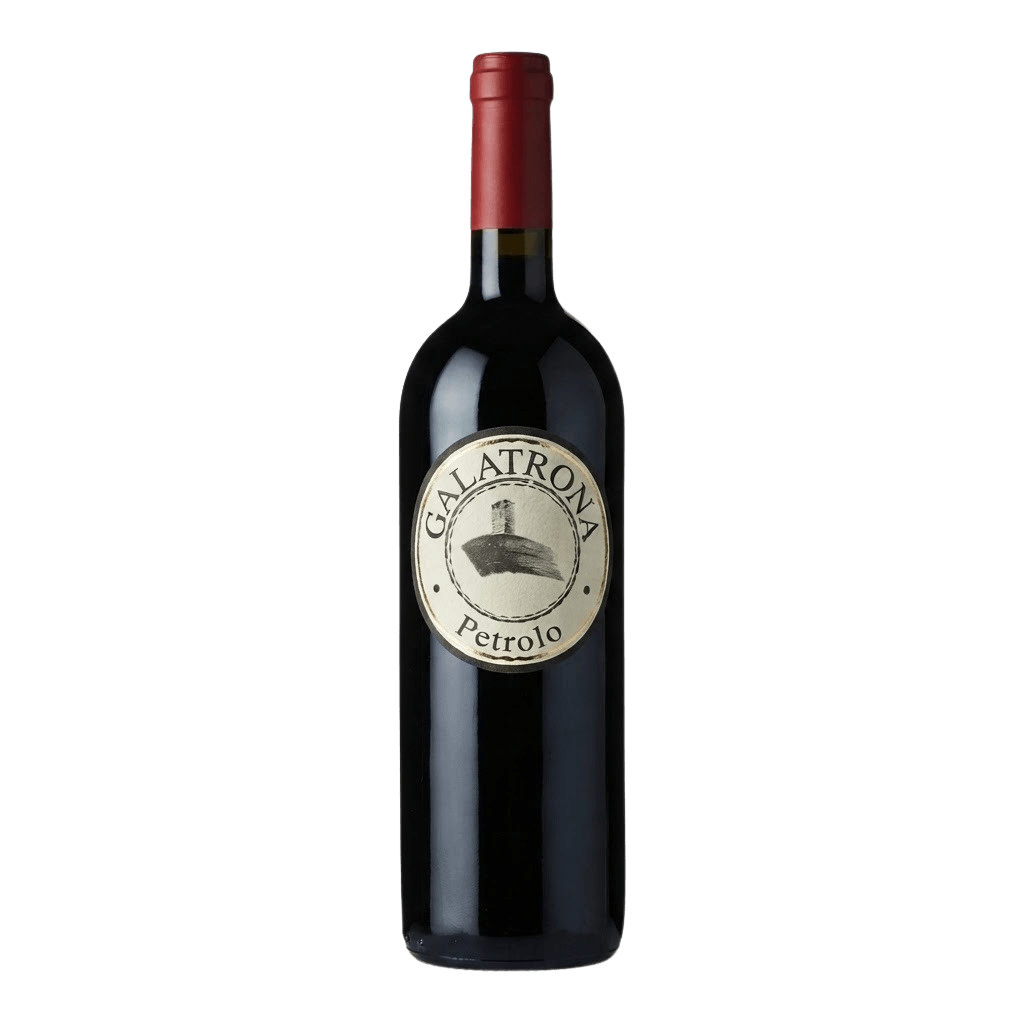
Petrolo Galatrona
2022
From 106 EUR from 3 retailers
A 100% Merlot cru from Petrolo's clay-rich Galatrona vineyard in Val d’Arno di Sopra, combining structure, concentrated fruit, freshness and refined tannins.
Country
Italy
Region
Tuscany
Number of retailers: 3
Bottle Hero
European Union
Petrolo Galatrona
2022
Philipson Wine ApS
Sweden
Petrolo Galatrona
2022
Standard delivery 1-3 business days
Gassås Wine
Sweden
Petrolo Galatrona
2022
Standard delivery 1-3 business days
You save up to 26 EUR, where 26 EUR is the difference between the highest price and the lowest price
More information
Producer
Petrolo
Petrolo is a historic Tuscan estate in the hills of Val d’Arno di Sopra, near Mercatale Valdarno in the municipality of Bucine, between Florence, Siena and Arezzo. Vineyards, olive groves and woodland form an interconnected landscape on the south-eastern side of the Chianti hills, overlooked by the medieval Torre di Galatrona.
Since the second half of the 1980s, Petrolo has progressively concentrated its wine production around individual vineyards and low yields, focusing on wines intended to express the character of the estate rather than maintaining a broad range of entry-level bottlings. Its vineyards encompass Sangiovese, Merlot, Cabernet Sauvignon and Trebbiano, with Galatrona establishing the estate's distinctive interpretation of Merlot.
Quick Facts
- Producer: Petrolo
- Location: Mercatale Valdarno, Bucine, Arezzo
- Region: Tuscany, Italy
- Wine territory: Val d’Arno di Sopra
- Family ownership: Bazzocchi family since the 1940s
- Principal varieties: Sangiovese, Merlot, Cabernet Sauvignon and Trebbiano
- Flagship cru: Galatrona
- Viticulture: Certified organic since 2016
History and Identity
Winegrowing at Petrolo belongs to a much older tradition in the Val d’Arno di Sopra. In 1716, Grand Duke Cosimo III de' Medici identified Val d'Arno di Sopra alongside Chianti, Carmignano and Pomino as one of Tuscany's areas recognised for the quality of its wine and olive oil.
During the nineteenth century, Petrolo was owned by agronomist Giorgio Perrin, who wrote in 1834 about Sangiovese and the character of the local terroir. The estate was acquired by the Bazzocchi family in the 1940s, beginning the family chapter that continues today.
A major transformation began during the second half of the 1980s. Petrolo moved progressively away from volume production towards increasingly selective viticulture and a smaller portfolio of vineyard-focused wines. The estate notes that vineyard density rose from around 1,500 plants per hectare in the 1950s to around 5,500, while overall wine production declined from approximately 3,500 hectolitres to fewer than 700.
This transition ultimately established the modern Petrolo identity: low yields, individual vineyards, careful grape selection and wines closely connected to their place of origin.
Estate, Vineyards and Terroir
Petrolo lies on the south-eastern edge of the Chianti hills, within the historic Val d’Arno di Sopra territory. Vineyards coexist with olive groves, oak woodland and other natural vegetation, creating a diverse agricultural landscape.
Rather than being defined by a single soil or grape variety, Petrolo comprises several distinctive vineyard sites.
Bòggina is the estate's historic Sangiovese vineyard, originally planted by Gastone Bazzocchi in 1947. It provides fruit for several expressions bearing the Bòggina name.
Galatrona is Petrolo's principal Merlot vineyard. Approximately 10 hectares in size and situated around 300 metres above sea level with a south-eastern exposure, it contains clay-rich soils combined with shale, marl and sandstone. The vineyard comprises the Galatrona, Feriale and Dottore parcels.
The estate also includes smaller sites such as Campo Lusso, planted to Cabernet Sauvignon on a natural terrace beneath the medieval Galatrona tower, together with vineyards including Campaccio, Campo Ai Diavoli, Casariccio, Lecceta, Meletana and Ospedale.
This mosaic allows Petrolo to work with several varieties while maintaining a strongly site-specific approach.
Viticulture
Petrolo began moving away from conventional farming practices in 2004, progressively adopting natural and sustainable vineyard management.
The estate practises dry farming, avoids fertilisation and tillage, maintains permanent grass cover managed through mulching and does not use synthetic pesticides. Vineyard work is largely manual and adapted to individual plants rather than applied uniformly across every parcel.
Petrolo obtained organic certification in 2016 for its wines, following a much longer history of organic cultivation in its olive groves.
The underlying philosophy is one of natural balance: vegetation, vines, olive trees and woodland are treated as components of the same agricultural ecosystem rather than isolated crops.
Production and Winemaking
Petrolo's cellar philosophy follows the same selective approach established in the vineyards.
Hand harvesting, rigorous grape selection and relatively low yields underpin production. For its major red crus, Petrolo uses native yeasts and seeks to allow the individual vineyard to determine the character of the finished wine rather than imposing a uniform cellar style.
Galatrona, for example, is fermented naturally with native yeasts in cement vats following manual harvesting and sorting. Bòggina A takes a distinctly different route, with Sangiovese fermented and matured in terracotta amphorae. Bòggina B, made from Trebbiano, is vinified and matured in French oak tonneaux.
These differences are important for the producer page: Petrolo does not employ one fixed winemaking recipe across its portfolio. Vessel, maturation and élevage depend on the vineyard and individual wine.
Exact maturation periods, oak proportions and other technical specifications should therefore remain on the relevant bottle and vintage pages.
Style and Identity
Petrolo's identity is based less on a single grape variety than on the relationship between individual vineyard sites and their varieties.
Sangiovese provides the historical Tuscan foundation through vineyards such as Bòggina. Merlot reaches its most concentrated expression in Galatrona. Cabernet Sauvignon is represented by the tiny Campo Lusso vineyard, while Trebbiano provides a white-wine dimension through Bòggina B.
Across these wines, Petrolo seeks concentration without losing balance, with an emphasis on terroir, freshness, structure and individual vineyard character.
For SCI, I would define Petrolo's producer DNA as:
Val d’Arno di Sopra → individual vineyards → low yields → organic farming → native yeasts → restrained intervention → terroir expression
Portfolio
Galatrona
Petrolo's celebrated 100% Merlot cru, first produced in 1994 from the Galatrona vineyard. The wine carries the denomination Val d’Arno di Sopra DOC – Vigna Galatrona and is produced from approximately ten hectares of clay-rich vineyard soils.
Bòggina C
The estate's Sangiovese cru from the historic Bòggina vineyard, originally planted in 1947.
Bòggina A
A distinctive 100% Sangiovese expression from Bòggina, fermented and matured in terracotta amphorae and first produced in 2011.
Bòggina B
Petrolo's 100% Trebbiano white wine, created in 2014 as a reference to the historic white-wine tradition of Valdarno.
Campo Lusso
A tiny-production 100% Cabernet Sauvignon from approximately half a hectare beneath the Torre di Galatrona.
Torrione
A central Petrolo wine drawing on estate vineyards and reflecting the broader red-wine identity of the property.
Explore Petrolo Wines
Discover Galatrona, Bòggina, Campo Lusso and Torrione. Compare vintages, critic scores, availability and current prices from trusted wine merchants.
Country
Region
Tuscany
Tuscany is widely regarded as Italy's most prestigious wine region and has established itself as one of the world's great fine wine destinations. Located in central Italy, the region combines centuries of winemaking heritage with diverse terroir, producing some of the most collectible and age-worthy wines in the country. From historic Chianti estates to the acclaimed Super Tuscans, Tuscany represents the pinnacle of Italian winemaking tradition and innovation.
The region's diverse landscape encompasses rolling hills, varied elevations and distinct soil types that create ideal conditions for Sangiovese, Tuscany's signature grape. The Chianti Classico zone between Florence and Siena is characterised by galestro and alberese soils, producing elegant, structured wines with exceptional ageing potential. Montalcino's warmer climate and clay-limestone soils yield the powerful Brunello, while Montepulciano's volcanic and sandy terrains create the distinguished Vino Nobile. The coastal Bolgheri area, with maritime influence and alluvial soils, has become renowned for Cabernet Sauvignon and Merlot-based Super Tuscans that challenge Bordeaux's finest.
Tuscany is home to legendary estates including Antinori, Sassicaia, Ornellaia, Biondi-Santi, Fontodi and Castello di Ama. The region's DOCG classifications—Brunello di Montalcino, Vino Nobile di Montepulciano and Chianti Classico—represent the highest quality standards in Italian wine. These estates and appellations continue to define excellence in Sangiovese production while pioneering innovative blends that have reshaped the international fine wine landscape.
Whether exploring historic Chianti Classico, the refined elegance of Brunello or benchmark Super Tuscans, Tuscany offers an extraordinary journey through Italy's finest wine heritage. Discover Tuscany wines, compare prices from trusted merchants across Europe and find the best offers with Sipfind.
Grapes
Merlot is one of the world’s most important red wine grapes, celebrated for its generous fruit, supple texture and ability to produce wines ranging from approachable and elegant to exceptionally complex and long-lived. Originating in Bordeaux, France, Merlot is particularly associated with the Right Bank, where it forms the foundation of many of the prestigious wines of Pomerol and Saint-Émilion.
Merlot typically expresses flavours and aromas of plum, black cherry, blackberry and red fruits, often developing notes of chocolate, tobacco, cedar, herbs and earthy complexity with maturation. Its naturally rounded texture and generally softer tannin profile distinguish it from Cabernet Sauvignon, although the finest examples can possess considerable structure, freshness and ageing potential.
In Pomerol, Merlot reaches some of its most celebrated expressions, particularly on the appellation’s clay-rich soils, producing wines of remarkable concentration, texture and complexity. In Saint-Émilion, it is commonly blended with Cabernet Franc and, to a lesser extent, Cabernet Sauvignon, creating wines that combine ripe fruit with structure, aromatic complexity and longevity.
Beyond Bordeaux, Merlot is widely cultivated in Italy, California, Washington State, Chile and other major wine regions. It can be produced as a varietal wine or used as a central component of blends, where its fruit and texture complement more structured grape varieties.
From the great Merlot-based wines of Bordeaux’s Right Bank to leading expressions around the world, Merlot’s combination of rich fruit, refined texture and capacity to express terroir has established it as one of the defining varieties of fine red wine.
History and Style
Petrolo Galatrona
Galatrona is Petrolo's single-vineyard Merlot and one of the defining wines of the estate. Produced exclusively from the vineyard of the same name in Val d’Arno di Sopra, it was first released from the 1994 vintage and is made entirely from Merlot. Petrolo itself describes Galatrona as its Merlot “Grand-Cru”, reflecting its position within the estate rather than a formal classification.
The wine's identity is closely connected to its clay-rich vineyard on the south-eastern edge of the Chianti hills. Here, Merlot combines concentration and structure with acidity, balanced tannins and freshness, creating a distinctly Tuscan interpretation of the variety rather than an imitation of another Merlot-producing region.
Quick Facts
- Producer: Petrolo
- Wine: Galatrona
- Denomination: Val d’Arno di Sopra DOC – Vigna Galatrona
- Region: Tuscany, Italy
- Grape: 100% Merlot
- First Vintage: 1994
- Vineyard: Galatrona
- Certification: Organic
History and Identity
Galatrona emerged from Petrolo's transformation towards increasingly selective, vineyard-focused production during the late twentieth century.
The Galatrona vineyard was planted from the late 1980s into the mid-1990s using low-vigour Bordeaux Merlot clones. Petrolo separately identifies 1990 as the planting date of its first Merlot vineyard, while the broader Galatrona site developed through subsequent plantings. The first Galatrona wine was produced in 1994.
From the outset, the concept was unusually focused: one variety, one vineyard and a wine designed to communicate the character of that site.
Galatrona is therefore not a Bordeaux-style blend built around Merlot. It is:
100% Merlot.
Nor is “Grand-Cru” an Italian legal classification here. It is Petrolo's own description of Galatrona's position as its principal Merlot cru.
That distinction should be permanently retained by SCI.
Vineyard and Terroir
The Galatrona vineyard covers approximately 10 hectares and contains almost 50,000 vines, trained using spurred cordon. It lies at approximately 300 metres above sea level, with a south-eastern exposure on the south-eastern edge of the Chianti hills within Val d’Arno di Sopra.
The site is particularly suited to Merlot because of its substantial clay component.
Its soils combine:
clay → shale → marl → sandstone.
The clay is especially important in Tuscany's warm, dry summers because it helps retain moisture, something Petrolo specifically identifies as beneficial for Merlot. Stones and shale contribute to the site's physical complexity and drainage characteristics.
Petrolo identifies Galatrona, Feriale and Dottore as the three parcels composing the vineyard.
For SCI, the terroir relationship is therefore unusually clear:
Galatrona Vineyard → clay-rich soils → Merlot → water retention → concentration + freshness + structure
Viticulture
Petrolo began moving away from conventional farming in 2004, introducing increasingly natural and sustainable vineyard practices.
At Galatrona these include dry farming, no fertilisation, no tillage, permanent grass cover managed with mulch and no synthetic pesticides. Vineyard canopy management is carried out manually and interventions are targeted according to the individual plants and conditions of the growing season.
Petrolo obtained official organic certification in 2016.
The mature vineyards require relatively little corrective pruning or crop thinning when naturally balanced, reinforcing Petrolo's objective of allowing vineyard conditions to determine the fruit rather than forcing uniform yields.
Production and Maturation
Galatrona is harvested manually into crates, followed by further selection on a sorting table.
Fermentation takes place naturally with native yeasts in cement vats, with frequent but gentle manual pump-overs. Malolactic fermentation occurs spontaneously in wood.
Petrolo currently describes maturation in French oak barriques for approximately 18–20 months, with around one-third new oak and regular bâtonnage of the fine lees during the first six months.
This gives Galatrona a clearly defined production architecture:
Manual harvest → sorting → native yeasts → cement fermentation → spontaneous malolactic fermentation in wood → French oak maturation
For the Sipfind master product, I would nevertheless treat the exact 18–20 months / one-third new oak as the producer's current production regime rather than assuming that every historical vintage was made identically.
Vintage pages can carry the exact élevage for each year whenever Petrolo provides it.
Style and Tasting Profile
Petrolo describes Galatrona around structure, complexity, elegance and balance between acidity, fruit and tannins.
That gives us a much stronger master identity than borrowing tasting notes from an individual vintage.
Galatrona's style should therefore be expressed as:
ripe Merlot fruit → concentration → freshness → structured tannins → balance → complexity → persistence
The wine can be powerful, but the defining feature is the interaction between Merlot's fruit and texture and the freshness and structure provided by the vineyard.
That distinction is important for Sipfind: Galatrona should not simply be classified as a generic “Super Tuscan Merlot”. Its formal and geographical identity is now much more precise:
Val d’Arno di Sopra DOC – Vigna Galatrona.
Ageing and Serving
Galatrona is structured for bottle development, but I would not place a fixed drinking window on the master page.
Its development varies materially by vintage, and critic drinking windows should therefore remain attached to individual vintage entities.
The master page should instead communicate that Galatrona combines sufficient fruit concentration, acidity and tannic structure for extended bottle ageing.
Explore Petrolo Galatrona on Sipfind
Compare vintages, critic scores, availability and current prices for Petrolo Galatrona from trusted wine merchants.