
Domaine Henri Boillot
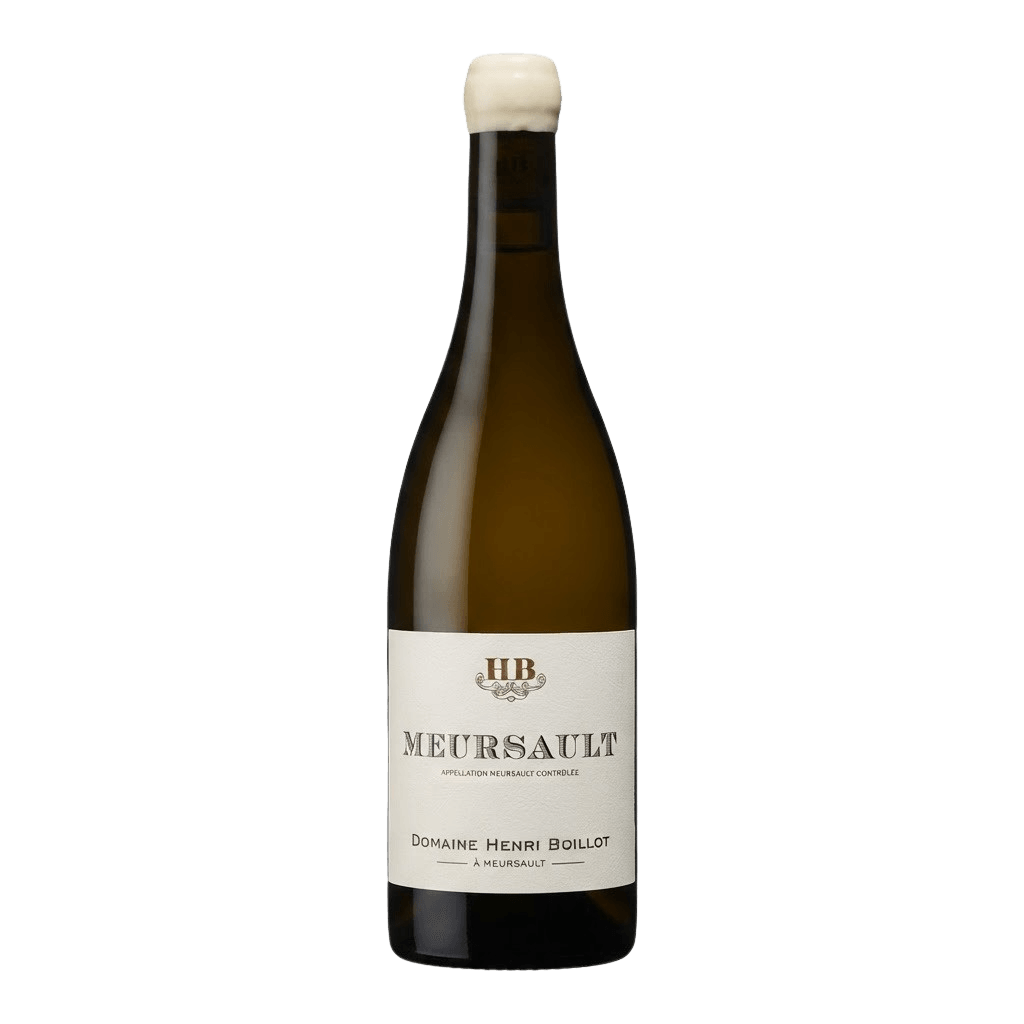
Domaine Henri Boillot Meursault
2025
An estate-grown Meursault Chardonnay combining generous texture and depth with mineral precision, freshness and the refined, energetic style of Domaine Henri Boillot.
Country
France
Region
Bourgogne
Scoring
No ratings are available for this vintage
More information
Producer
Domaine Henri Boillot
Based in Meursault in Burgundy's Côte de Beaune, Domaine Henri Boillot lies strategically between the two villages that define much of its identity: Puligny-Montrachet and Volnay. The domaine specialises in interpreting these contrasting terroirs through Chardonnay and Pinot Noir, seeking precision and individual expression from each climat.
Its identity is also built around generations of the Boillot family. Henri Boillot transformed and expanded the modern domaine, while his son Guillaume Boillot has progressively assumed responsibility for its vineyards and winemaking. Their work has combined continuity with an evolving approach to viticulture and cellar practice.
Quick Facts
- Producer: Domaine Henri Boillot
- Location: Meursault, Côte de Beaune
- Region: Burgundy, France
- Family winegrowing roots: 1885
- Principal varieties: Chardonnay and Pinot Noir
- Key vineyard focus: Puligny-Montrachet and Volnay
History and Identity
The Boillot family's winegrowing history in Burgundy reaches back to 1885, with Henri Boillot describing his grandfather Henri as the first generation to work vineyards already held by the family. Henri's father, Jean, subsequently developed the estate considerably.
Henri joined the family operation in 1975, progressing through the various roles of the domaine before becoming its winemaker. In 1995, he established his own négociant activity, creating what is today an important parallel part of the Henri Boillot portfolio.
A major transformation followed in 2000, when the first phase of new cellars and winery facilities was established in Meursault. In 2005, Henri acquired his siblings' interests, allowing the family holdings to remain together.
Guillaume Boillot joined the domaine in 2008. By 2012 he had become head of viticulture and assumed responsibility for vinifying the red wines. The generational transition subsequently continued, with Guillaume taking an increasingly comprehensive role across the domaine's production.
Vineyards and Terroir
The domaine's philosophy is centred on the individuality of Burgundy's climats rather than on imposing a uniform house style.
Two villages provide its principal reference points.
Puligny-Montrachet
Puligny-Montrachet is central to the domaine's white-wine identity. Its vineyards combine brown limestone soils with limestone, marl and clay-limestone formations, with soil depth and composition changing according to position on the slope.
Here, Chardonnay is used to express the precision, purity and elegance that the domaine associates with Puligny-Montrachet.
Among the most important holdings is Clos de la Mouchère, a monopole situated within Puligny-Montrachet Premier Cru Les Perrières. The domaine also owns vines in Bâtard-Montrachet Grand Cru, acquired in 2011.
Volnay
Volnay forms the other major pillar of Domaine Henri Boillot.
Its vineyards lie approximately 230–280 metres above sea level, with limestone-based soils associated with schist. The domaine identifies the resulting wines with aromatic intensity, finesse and nuanced complexity.
Pinot Noir from these sites provides the foundation for the domaine's red-wine identity.
Together, the two villages encapsulate the producer's philosophy:
Puligny-Montrachet → purity and elegance
Volnay → finesse and aromatic intensity
Viticulture
For Domaine Henri Boillot, the production of fine wine begins in the vineyard.
The domaine emphasises precision throughout the growing cycle, from pruning onwards, while seeking to minimise interventions and vineyard inputs. It states that this restrained approach has been part of its philosophy since the 1990s, with the objective of respecting the vine's environment and allowing terroir to remain central to the resulting wines.
This is best described as highly reasoned, low-intervention viticulture rather than assigning an organic or biodynamic certification unless one is explicitly documented for the relevant period.
The underlying principle is straightforward: vineyard work should reveal differences between sites rather than erase them.
Production and Winemaking
Precision continues in the cellar, but Domaine Henri Boillot deliberately avoids treating winemaking as a rigid formula.
Historically, Henri concentrated increasingly on the domaine's white wines, seeking what he described as straight, tense, precise, pure and elegant expressions. Guillaume initially took responsibility for the reds and later expanded his role across the domaine.
For the red wines, Guillaume has emphasised elegance, texture and finesse while seeking to reveal the character of Volnay and the domaine's individual climats.
Importantly for Sipfind, oak treatment, whole-bunch use, yields, maturation and other technical decisions should not be fixed at producer level. They can change according to wine and vintage. The domaine's own 2021 vintage report, for example, notes that Guillaume chose not to introduce new oak for the reds that year in order to preserve their terroir expression.
Those details therefore belong to our individual bottle and vintage entities.
Style and Identity
Domaine Henri Boillot's central objective is the definition of terroir.
For the whites, the recurring stylistic vocabulary is:
precision → tension → purity → elegance
For the reds:
finesse → sensuality → texture → aromatic definition
The intention is not to make every wine taste alike. Instead, the domaine seeks to expose differences in limestone, clay, altitude, exposition and individual climat through the wine itself.
This philosophy is particularly well suited to Sipfind's structure because the individual vineyard becomes an important entity, rather than simply another product name.
Domaine and Maison Henri Boillot
We should make an important distinction in Sipfind.
Domaine Henri Boillot represents wines produced from the family's own vineyard holdings.
Alongside it operates Maison Henri Boillot, the négociant activity established by Henri in 1995.
Both can produce wines carrying the Henri Boillot name, but they are not identical sourcing concepts.
For SCI, we should therefore preserve the distinction between:
Domaine Henri Boillot → estate vineyards
and
Maison Henri Boillot → négociant wines
rather than merging everything into a generic “Henri Boillot” producer entity.
Portfolio
The domaine produces both white and red Burgundy, extending from village wines through Premier Cru and Grand Cru sites.
Its core identity centres particularly on:
Puligny-Montrachet — Chardonnay, including important Premier Cru holdings and the monopole Clos de la Mouchère.
Volnay — Pinot Noir from village and Premier Cru terroirs.
The wider Henri Boillot portfolio also encompasses wines from appellations including Meursault and other important Côte d'Or sites.
For Sipfind, each appellation, climat and classification should remain attached to the individual bottle entity rather than being flattened into a single producer-level portfolio description.
Explore Domaine Henri Boillot Wines
Discover Domaine Henri Boillot wines from Puligny-Montrachet, Volnay and across Burgundy. Compare vintages, critic scores, availability and current prices from trusted wine merchants.
Country
Region
Bourgogne
Bourgogne is widely regarded as the world's most prestigious wine region and has defined the concept of terroir for generations of winemakers and collectors. Located in eastern France, the region combines centuries of monastic tradition with exceptional vineyard sites, producing some of the most sought-after and age-worthy wines ever made. From legendary Grand Cru climats in Vosne-Romanée and Puligny-Montrachet to historic domaines passed down through generations, Bourgogne represents the benchmark against which the world's finest Pinot Noir and Chardonnay are measured.
The region extends from Chablis in the north to Beaujolais in the south, with the heartland centred on the Côte d'Or—comprising the Côte de Nuits and Côte de Beaune. Here, limestone and marl soils combined with precise eastern and southeastern exposures create ideal conditions for Pinot Noir and Chardonnay. The Grand Cru vineyards of Chambertin, Romanée-Conti, Musigny, Corton-Charlemagne and Montrachet represent the pinnacle of Burgundian terroir, each climat expressing distinct soil composition, elevation and microclimate. The Côte de Nuits is renowned for structured, long-lived Pinot Noir, while the Côte de Beaune produces both refined reds and exceptional white Burgundy. Chablis to the north offers precise, mineral-driven Chardonnay from Kimmeridgian limestone, while Côte Chalonnaise and Mâconnais provide distinguished expressions at more accessible levels.
Bourgogne is home to the historic Grand Cru and Premier Cru classification system, which recognises the finest climats based on centuries of observation and viticultural knowledge. Legendary producers including Domaine de la Romanée-Conti, Domaine Leroy, Domaine Armand Rousseau, Domaine Leflaive, Domaine Ramonet and Domaine Coche-Dury continue to set the standard for fine wine, crafting wines of remarkable precision, complexity and longevity. Unlike Bordeaux's estate-based system, Burgundy's fragmented ownership means individual climats may be divided among multiple growers, making vineyard site and producer equally essential to understanding quality and collectability.
Whether exploring iconic Grand Cru bottlings, historic Premier Cru vineyards or distinguished village appellations, Bourgogne offers an unrivalled journey through the world's most terroir-focused wine region. Discover Bourgogne wines, compare prices from trusted merchants across Europe and find the best offers with Sipfind.
Grapes
Chardonnay is one of the world’s most important and prestigious white wine grapes, renowned for its remarkable versatility and ability to reflect both terroir and winemaking style. Most famously associated with Burgundy and Champagne in France, Chardonnay is cultivated across virtually every major wine-producing country and can produce everything from precise, mineral-driven whites to rich, complex wines with exceptional ageing potential.
In Burgundy, Chardonnay reaches some of its most celebrated expressions. The limestone-rich vineyards of Chablis are known for wines combining vibrant acidity, citrus character and mineral precision, while the Côte de Beaune, particularly appellations such as Meursault, Puligny-Montrachet and Chassagne-Montrachet, produces some of the world’s most sought-after and age-worthy white wines.
Chardonnay also plays a fundamental role in Champagne, where it contributes freshness, finesse and acidity to blends alongside Pinot Noir and Meunier. When produced exclusively from Chardonnay, the resulting Champagne is known as Blanc de Blancs, a style prized for its elegance, precision and capacity to develop considerable complexity with extended ageing.
The grape’s character varies significantly according to climate, terroir and winemaking. Cooler regions can produce wines showing citrus, green apple, white flowers and mineral notes, while warmer conditions can bring peach, melon and tropical-fruit character. Oak fermentation, barrel ageing and malolactic fermentation can introduce additional layers of toast, vanilla, butter and hazelnut, demonstrating Chardonnay’s exceptional stylistic range.
Beyond France, Chardonnay has established important expressions in California, Australia, New Zealand, South Africa and numerous other wine regions. From the mineral whites of Chablis and the great vineyards of Burgundy to Blanc de Blancs Champagne and modern New World interpretations, Chardonnay’s combination of versatility, complexity and terroir expression has established it as one of the defining grape varieties of fine wine.
History and Style
Domaine Henri Boillot Meursault
Domaine Henri Boillot Meursault is the domaine's village-level expression of one of the Côte de Beaune's defining Chardonnay appellations. Produced from estate vineyards in Meursault, it offers an important introduction to both the appellation and the white-wine philosophy of Domaine Henri Boillot.
The wine combines Chardonnay grown on clay-limestone soils with a style built around purity, energy and terroir definition. While Meursault provides richness and breadth, Henri Boillot seeks to retain acidity, minerality and precision rather than allowing weight or oak to dominate the wine.
Quick Facts
- Producer: Domaine Henri Boillot
- Wine: Meursault
- Category: Dry white Burgundy
- Appellation: Meursault
- Region: Côte de Beaune, Burgundy
- Grape: Chardonnay
Identity and Place
Meursault has a particularly important relationship with Domaine Henri Boillot: the domaine itself is based in the village, strategically positioned between its two historic specialities, Puligny-Montrachet and Volnay. Its cellars and winery were established in Meursault in 2000 and subsequently expanded.
Within the portfolio, Domaine Henri Boillot Meursault occupies a different position from the domaine's Premier Cru bottlings such as Clos Richemont, Les Genevrières and Les Gouttes d'Or.
This is the domaine's Meursault appellation wine, without a Premier Cru designation, allowing it to function as a broader expression of the village and of Henri Boillot's approach to Chardonnay.
Vineyards and Terroir
Domaine Henri Boillot identifies the soils for its Meursault as clay and limestone, with an average planting density of approximately 10,000 vines per hectare. Chardonnay is the grape variety.
This combination of limestone and clay is fundamental to the wine's balance.
The domaine's broader philosophy is to reveal differences in Burgundy's soils – particularly the interaction between limestone, clay and mineral components – rather than impose a uniform winemaking signature across its wines.
For the Meursault, this translates into a stylistic balance between:
Texture and volume → acidity → minerality → precision → freshness.
Production and Maturation
Oak maturation forms part of the wine's élevage, but we should not assign one fixed oak regime to the master bottle.
The technical sheets demonstrate why.
For the 2017 vintage, Domaine Henri Boillot reported 20% new 350-litre oak and 10 months of maturation.
For 2021, the wine was matured for 12 months in 350-litre oak barrels.
For 2022, the élevage was 20% new 350-litre oak and 80% single-vintage 350-litre barrels for 12 months.
Yield also varies by vintage: the domaine reports 45 hl/ha for 2017 and 50 hl/ha for both 2021 and 2022.
Therefore:
Oak percentage → vintage-specific
Maturation period → vintage-specific
Yield → vintage-specific
Alcohol → vintage-specific
These belong on Sipfind's vintage pages, not this master product entity.
Style and Tasting Profile
The recurring character of Domaine Henri Boillot Meursault is a combination of richness and precision.
The domaine's technical sheets across different vintages repeatedly show a wine balancing generous texture with acidity, minerality and a saline dimension.
The 2021 release, for example, was described by the domaine as rich, precise and mineral, with length and a saline finish. The 2022 showed greater volume and density while retaining acidity, precision, minerality and a slightly salty finish.
These recurring structural characteristics are useful for our master page.
Individual aromas – such as white blossom, pear, lime, grapefruit, white peach or vanilla – should not be hard-coded into the generic bottle entity because they belong to individual vintage tasting notes.
The master style is better defined as:
Generous → textured → mineral → fresh → precise → saline.
Meursault within the Domaine
Domaine Henri Boillot produces Meursault at several levels, making the hierarchy important for Sipfind.
The portfolio includes the village-level Domaine Henri Boillot Meursault, alongside Premier Cru wines including Clos Richemont Monopole, Les Genevrières and Les Gouttes d'Or.
They must remain separate bottle entities.
There is another particularly important distinction:
Domaine Henri Boillot Meursault
= estate wine
Maison Henri Boillot Meursault
= négociant wine
Both appear independently in Henri Boillot's own portfolio.
SCI should therefore never merge the two simply because both carry the Henri Boillot and Meursault names.
Ageing and Serving
The wine has sufficient acidity and structure for bottle development, but the optimum drinking period changes with the vintage.
For example, the domaine gives 2025–2029 for the 2021 and 2027–2032 for the 2022 release. Both technical sheets recommend serving at approximately 13°C.
We should therefore retain 13°C as producer guidance while keeping exact drinking windows on the individual vintage pages.
Explore Domaine Henri Boillot Meursault on Sipfind
Compare Domaine Henri Boillot Meursault vintages, critic scores, availability and current prices from trusted wine merchants.